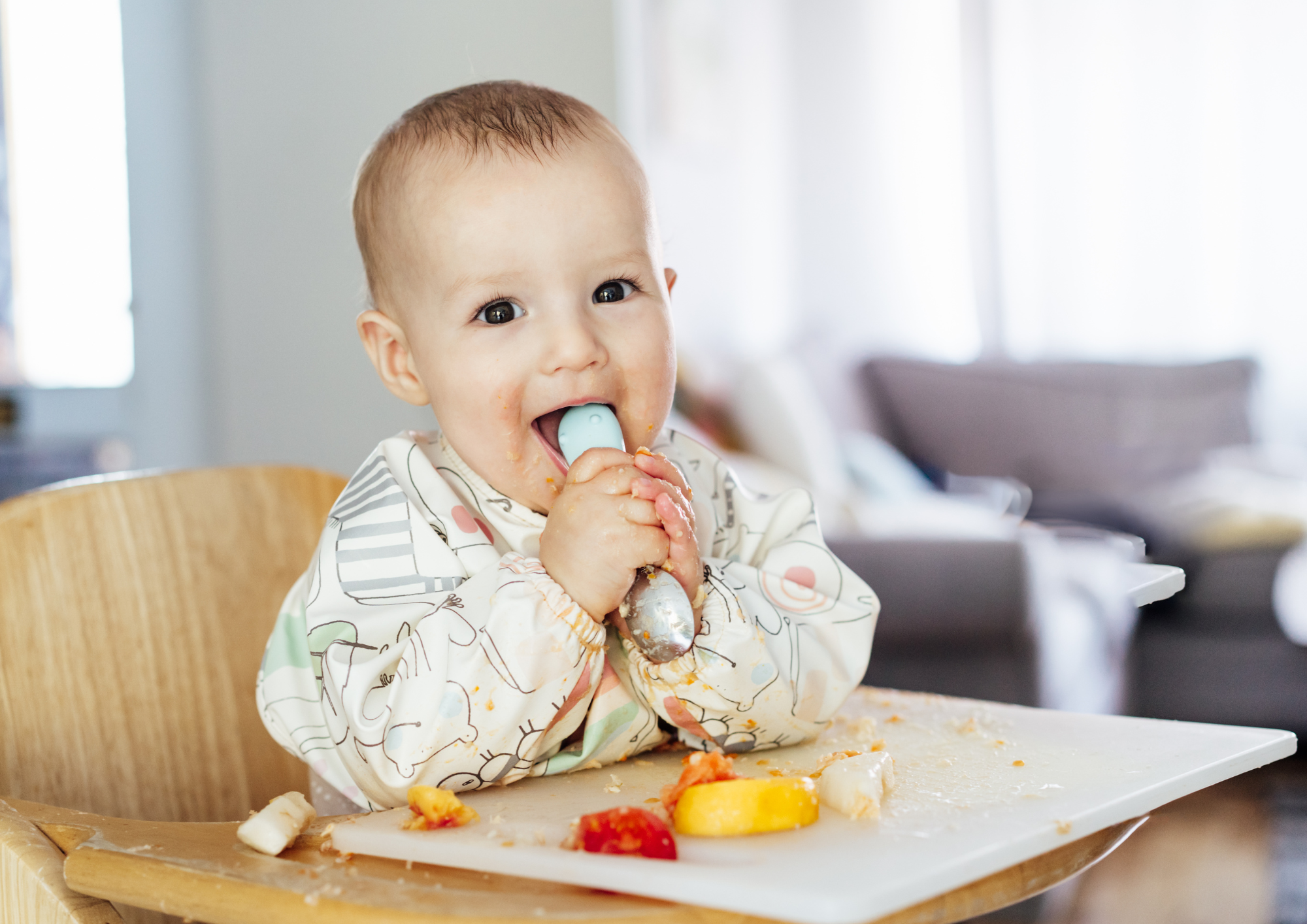
Could Your Baby's Gut Health in the First Year Affect Their Risk of Autism?
You might have seen a headline recently claiming that a baby's gut health before the age of one could shape their risk of autism. It's the kind of thing that makes you stop scrolling and wonder: is this actually true?
As an Accredited Practising Dietitian specialising in paediatric and prenatal nutrition, I’ll break down what the science is really saying
What the latest research actually found
A major study published in 2026 followed nearly 1,000 infants and tracked what was living in their guts at 2, 6, and 12 months of age. Researchers also looked at the babies' DNA at birth to understand how their genes were "switched on or off" in early life.
When the children turned three, the researchers checked in on their development. What they found was genuinely interesting:
The way a baby's genes are "switched" at birth can influence which gut bacteria they develop in their first year
Certain combinations of gene patterns and gut bacteria were linked to early signs of autism by age three
Some bacteria appeared protective - babies with a particular gut bacteria were less likely to show early signs of autism, even when they had gene patterns that would otherwise put them at higher risk
Is autism risk linked to gut-brain development?
Here is what we know so far.
Children with autism often have a different gut microbiome
Multiple studies have found that children with autism tend to have lower levels of beneficial bacteria and higher levels of bacteria linked to gut inflammation. They also tend to have less variety in their gut bacteria overall.
Gut symptoms are very common in autism
Around 40% of children with autism experience digestive issues like constipation, diarrhoea, or stomach pain - and the severity of those gut symptoms often tracks alongside the severity of behavioural symptoms.
The gut and the brain are constantly communicating
Gut bacteria produce compounds, including precursors to serotonin that travel to the brain and influence how it develops and functions. When the balance of gut bacteria is disrupted, this communication can be too.
Mum’s diet during pregnancy matters too
A large study combining data from Norway and England found that mothers who ate a healthy, varied diet during pregnancy had a 22% lower chance of having a child later diagnosed with autism, compared to mothers with poorer dietary patterns.
What shapes a baby’s gut in the first year?
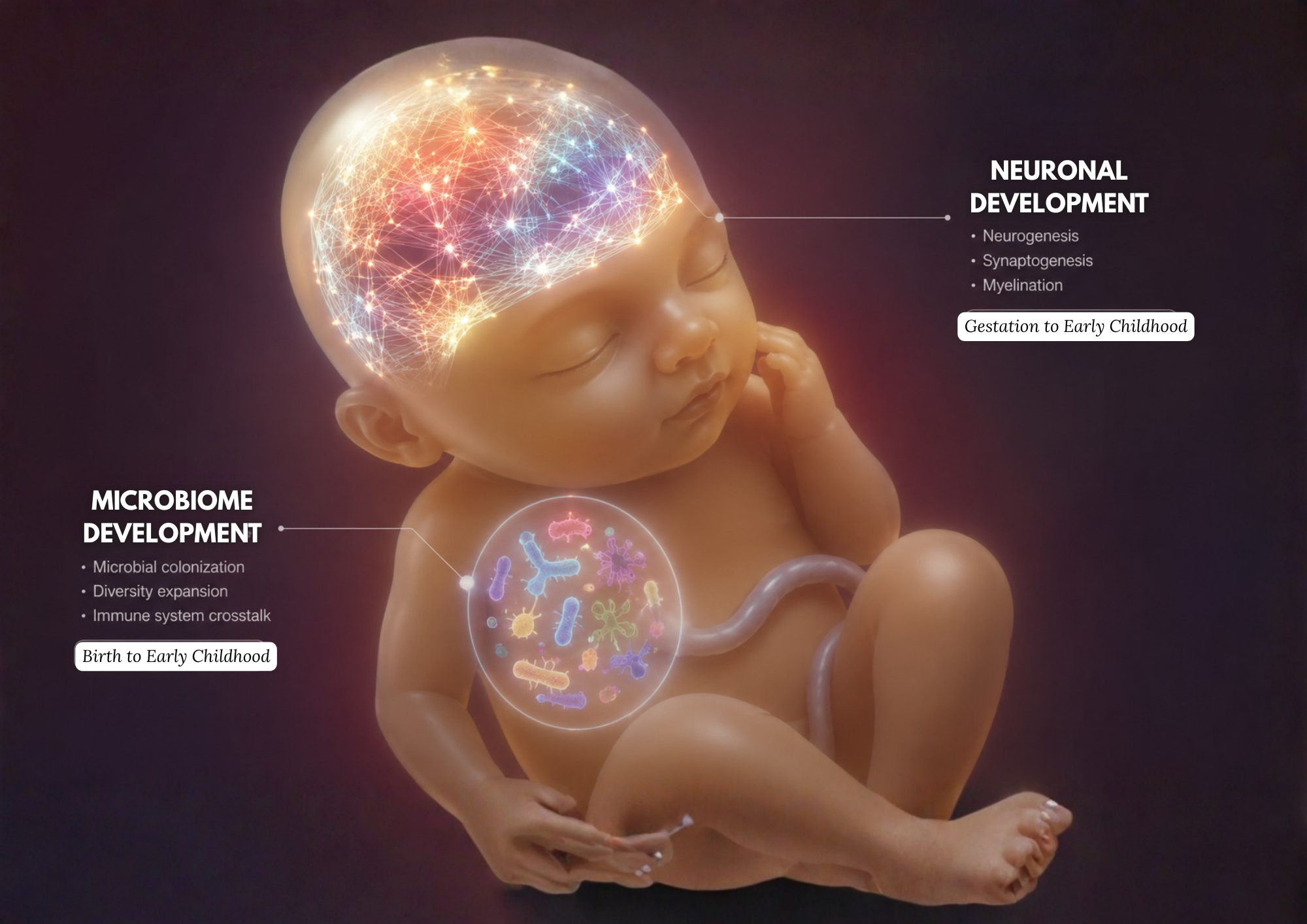
Mode of birth
Babies born vaginally pick up their first microbes during delivery - a crucial early event for gut development. Babies born via caesarean section miss this exposure and tend to have lower gut microbiome diversity in infancy.
Breastfeeding
Breast milk contains special fibres that selectively feed beneficial bacteria. Breastfed babies consistently show higher levels of these protective bacteria compared to formula-fed babies.
Antibiotic use
Antibiotics in pregnancy or early infancy can disrupt the developing microbiome by wiping out beneficial bacteria alongside harmful ones. This doesn't mean antibiotics should be avoided when medically needed; it just means unnecessary can have repurcussions.
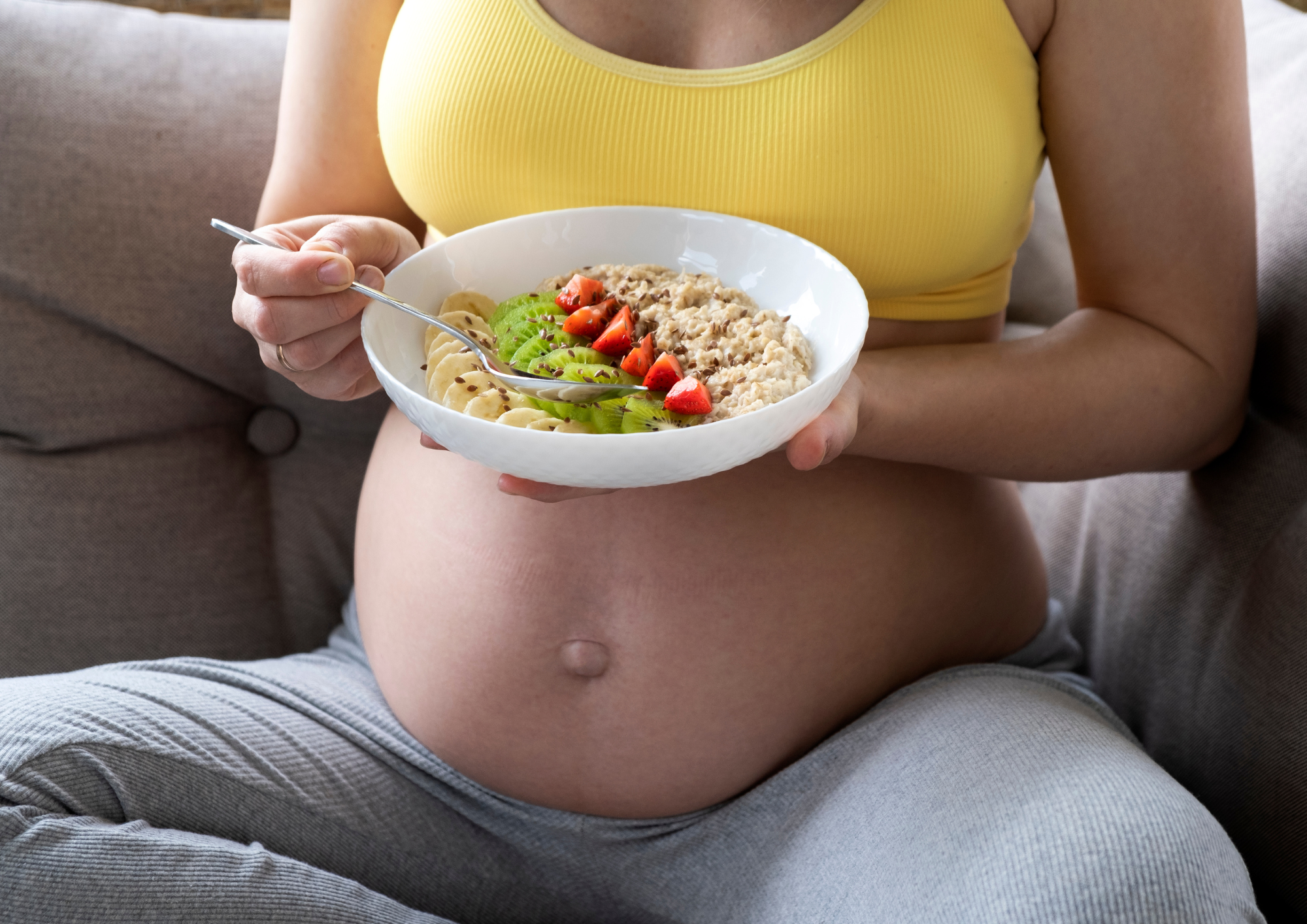
Mum’s diet during pregnancy & breastfeeding
A varied, fibre-rich diet supports a healthier maternal gut microbiome - which in turn shapes the environment the baby develops in before they're even born. Moreover, it also provides varied nutrient profile via the breastmilk
Having older siblings at home
Both this new study and previous research found that babies with older siblings tend to develop more diverse gut microbiomes - likely because they're exposed to a wider range of microbes in the home environment.
Practical takeaways
The gut microbiome influences early brain development and potentially autistic changes. Some of the things that shape it, like diet and breastfeeding, are within our influence. While we wait for more research, this is what we can do:
During pregnancy:
Eat a wide variety of vegetables, fruits, legumes, and wholegrains - diversity in your diet feeds diversity in your microbiome
Include fermented foods like yoghurt, kefir or sauerkraut as tolerated
Include omega-3 rich foods like oily fish, flaxseeds, and walnuts
Don't stress about being perfect - overall dietary patterns matter more than any single food
For your baby:
Breastfeed where possible and for as long as works for your family
When introducing solids around 6 months, offer a wide variety of foods. This is one of the best things you can do for microbiome diversity
Discuss if antibiotic use is really necessary with your doctor, especially in the first year of life
🔗 Direct link to the full paper:
https://www.cell.com/cell-press-blue/fulltext/S3051-3839(26)00007-1
DOI: 10.1016/j.cpblue.2026.100009