

Paediatric Dietitian
Expert Support for Fussy Eating & Child Nutrition

Mealtimes are meant to be positive, NOT one that causes distress for the child and family
As a paediatric dietitian and feeding therapist, I have supported clients as young as 8 months upwards. We provide support across the following areas:
Fussy eating
Food allergies and intolerance
Unexplained diarrhoea/constipation
Poor growth/underweight
Weight management
Tube feeding/tube weaning
Oro-motor delays and solid introduction
Sessions incorporate the following
STEP 1
Review your child’s development around growth and eating
STEP 2
Assist with the development of positive feeding/eating patterns
STEP 3
Strategies to reduce stress, anxiety and power struggles
STEP 4
Learn to navigate around challenges at the dinner table
STEP 5
Establish a mealtime and snack routine
STEP 6
Create positive mealtimes for the child to look forward to
STEP 7
Practice the division of responsibility at home and allow for autonomy in the child
STEP 8
Strengthen and support the development of oral motor and sensory skills
Changes you can expect
Child looking forward to mealtimes
Child feeling less anxious about new and unfamiliar foods
Child being able to describe their food preferences and avoid using descriptives like “yuck”
Child tracking along their growth percentiles for height and weight
Reduced mealtime stress for the family and no longer needing to prepare separate meals
Most common questions parents ask
“What do I do if she doesn’t eat dinner but wants a snack as soon as dinner is kept away?”
“How do I wean him off the iPad we’ve had the table for months?”
“How do I take my child out to a restaurant when he wouldn’t eat anything else?”
“How do I get my child to stay seated at the dining table?”

Blogs
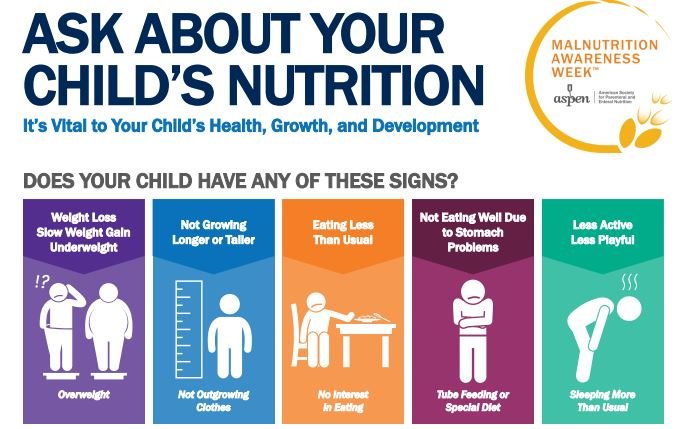
©2018 ASPEN, the American Society for Parenteral and Enteral Nutrition. All Rights Reserved.
Feeding concerns are most effectively addressed between the ages of 2 and 10
This is the age at taste buds are still developing and children are more open to trying new foods; both of which are important to establish healthy eating patterns. Once children develop a sense of independence, uncorrected preferences can easily change into habits for a lifetime.